
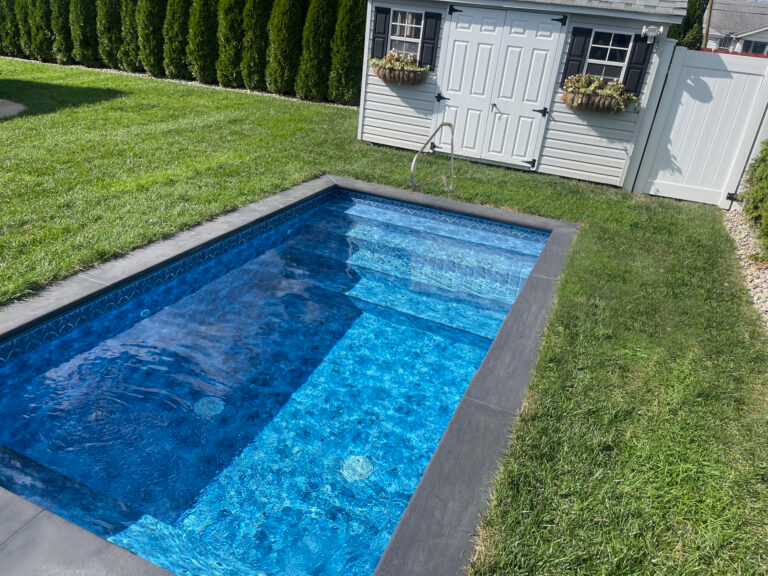
Luxury can carry a cost, but it doesn’t always have to weigh heavy on the planet. More homeowners are looking for ways to combine comfort with conscience, and eco-friendly plunge pools are quickly becoming a favorite example of that balance. They cool you off, warm you up, or simply create a backyard focal point—but do so while conserving water, reducing energy use, and easing the chemical load that larger pools bring.
Smaller Scale, Smarter Water Use
Big pools guzzle water. It’s unavoidable. Twenty thousand gallons at a time, sometimes more. That’s not just hard on utilities—it’s tough to justify in regions where conservation matters.
Plunge pools shrink that problem down to size. Their smaller footprints require a fraction of the water, which instantly lowers consumption. And with less surface area, evaporation slows.
Less water. Less waste. More sense.
Energy Savings Without the Sacrifice
Heating is another hidden cost in traditional pools. Kilowatts vanish quickly when you’re trying to warm that much water. Eco-friendly plunge pools, by design, heat and cool faster. That means less energy, smaller bills, and fewer emissions tied to your relaxation time.
Pair it with smart upgrades:
- Variable-speed pumps that throttle output down instead of running flat-out.
- Solar heating mats or panels to capture free energy.
- Timers that cut off circulation at night, when it isn’t needed.
Still—don’t mistake efficiency for compromise. The experience is the same. Evening soaks, crisp morning dips. You just reach those comfort levels without draining the grid.
Fewer Chemicals, Cleaner Results
Traditional pools often run on chlorine. Big jugs, big doses, constant monitoring. It keeps water safe but creates chemical runoff and storage headaches. With plunge pools, volume is lower, which makes alternative systems more practical.
Saltwater chlorination. Ozone injectors. UV filters. These are all easier to adopt and maintain in a smaller body of water. The pool stays clean, the smell is lighter, and the environmental footprint shrinks in step.
And here’s the funny part: families often notice the difference most when kids spend hours in the water.
Design That Feels Responsible
Eco-friendly isn’t just about what goes inside the pool—it’s also about how the area around it is planned. Builders are using recycled composites for decks, LED lights for nighttime safety, and permeable paving stones that reduce runoff.
Landscaping choices matter too. Native plants minimize irrigation. Shade trees or pergolas cut down evaporation naturally. Some even design their yards so that pool water can be drained and repurposed for non-potable landscaping use during maintenance cycles. The pool becomes a node in a broader sustainable backyard system, not a standalone energy hog.
Innovation at Smaller Scales
Because plunge pools are smaller, they’re often a testing ground for green tech that might be harder to apply to full-size pools. Builders and owners alike experiment with:
- Rainwater harvesting tie-ins that automatically supplement fill levels.
- Insulated shells that hold warmth longer.
- Smart covers that measure temperature, reduce evaporation, and open with minimal effort.
Not every feature is for everyone. But the point is choice—smaller pools make adopting eco upgrades realistic rather than overwhelming.
The Long View: Savings and Mindset
Over time, the advantages stack up. Lower bills. Fewer chemical purchases. Less maintenance stress. A smaller footprint on utilities overall.
Of course, the benefits aren’t only measured in numbers. For many, it’s a mindset shift. Once you’ve lived with something efficient, waste feels wrong. One homeowner compared it to swapping every lightbulb in the house for LEDs. At first it was about the utility bill. Later, it was about the principle. “Why would I waste more than I need to?”
No Guilt in Comfort with Eco-Friendly Plunge Pools
There’s often a fear that sustainability equals compromise. That going green means giving something up. But eco-friendly plunge pools disprove that idea. You still float, soak, or splash the same way. The only change is in what’s working quietly in the background—less energy, less water, less strain.
And oddly, that makes comfort feel different. Better. People enjoy their pools without the nagging guilt of excess. It’s not just about relaxation anymore—it’s about relaxation that makes sense.
Adapting to the Cultural Transition
Sustainability is starting to become the norm. Hybrid cars, solar panels, high-efficiency appliances—these aren’t fringe decisions anymore. They’re normal. Backyard amenities are following the same trend.
Eco-friendly plunge pools embody that cultural shift. They show that luxury features can be part of the solution, not just part of the problem. For many homeowners, that matters. The pool becomes not only a retreat but also a statement about priorities.
A Conscientious and Durable Upgrade
Enhancing a backyard involves more than just aesthetics. It concerns how the area will be used for many years to come. Long-term benefits of eco-friendly plunge pools include daily comfort now and a smaller environmental impact down the road.
For anyone weighing the decision, exploring eco-friendly plunge pools shows how style and sustainability are finally aligned. It’s not a compromise—it’s a better way forward. With Westrock Pools, you can discover plunge pool options that bring together modern design, efficiency, and a backyard experience you’ll feel good about for years to come.